getting in, and getting back out
Accessibility
What has been built into this site, three places it still falls short, and what a report of a barrier actually gets you.
Built in
- Headings
- Exactly one h1 per page, and the rest step down one level at a time with none omitted
- Keyboard alone
- Everything can be reached and worked without a mouse, and the ring showing where you are stays visible on each of the four grounds in use
- Contrast measurement
- Taken against whatever a piece of text actually sits on, which is not always white and is often not
- Alternative text
- Written by looking at the picture. Purely decorative images are given none, on the view that silence beats hearing the caption a second time
- The rhythm marks
- Shape only. A square loses more of its corner as the packing gets busier, which prints in grayscale and survives any form of color blindness
- Arrival of sections
- They shift a few pixels into place. None is ever made invisible, so a broken animation cannot swallow the page, and asking for less motion switches it off
- Zooming
- Four hundred percent still reflows, with no sideways scrollbar to hunt
- Fields
- Labeled properly, errors spelled out in words next to the field, and no meaning carried by color on its own
Where it still falls short
Three of them. Leaving them out would be the dishonest choice.
- The seven rows
- On a narrow phone the ledger on each trip page scrolls sideways. Legible, but not pleasant
- Testing
- One screen reader and one browser, not the full spread
- Language
- Written in plainer English than this trade manages, and available in that one language only
The buildings, not just the markup
A page like this one usually stops at the markup, which would be a strange place to stop here. This catalog is organized around how often you move, and moving is exactly where access questions live.
Some of it is already printed. Every trip page states the longest single move door to door, how the bag travels, and what share of the trip is spent in transit. Two of the ten name their stairs: the river ship has cabin decks reached by fourteen to eighteen steps with no elevator on the older vessels, and the sleeper berths are reached by a ladder.
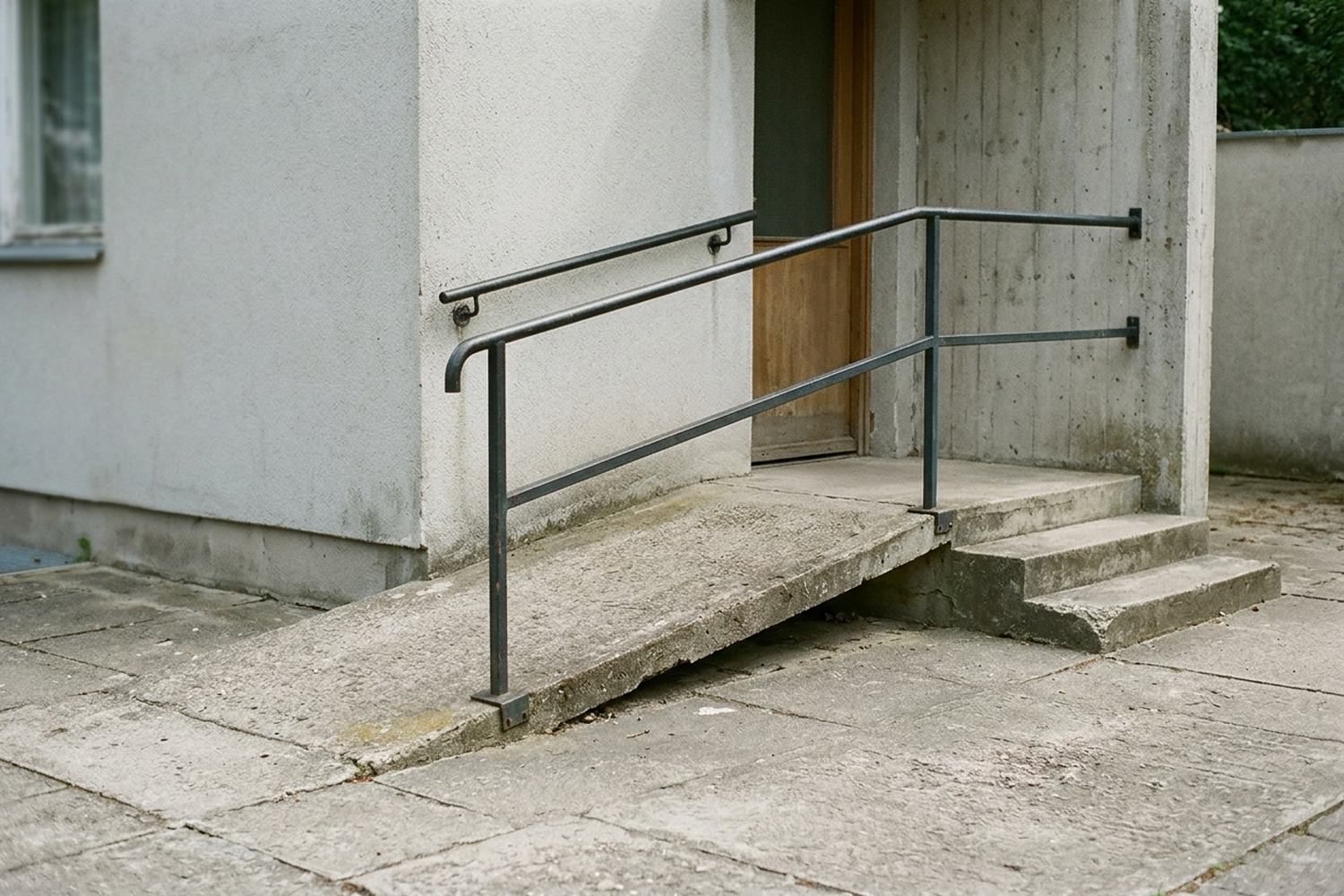
Missing so far is the building by building detail: whether there are steps at the entrance, whether a lift exists, how a bathroom is laid out. Those facts sit with individual properties and differ from one to the next. Raise it and the question is put to the operator in plain terms, counting steps and measuring doorways, and whatever comes back is repeated to you unedited, refusals included.
Reporting something
One line to onward@thistlecrossing.com does it: which page, what you were reading it with, and what went wrong. What comes back is either a fix and a date, or an admission that there will not be one. What does not come back is nothing at all.