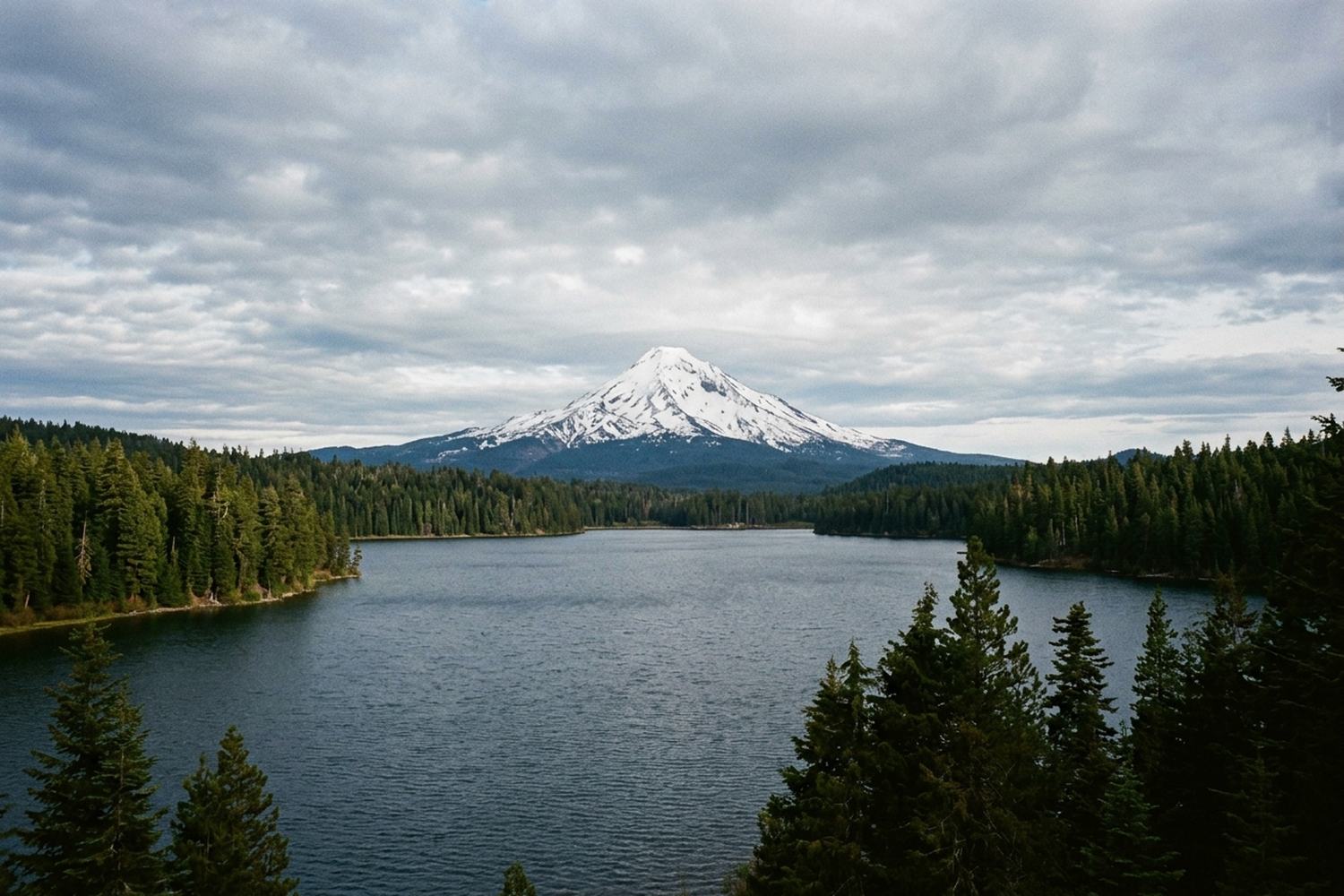
two bases | 10 nights | from $3,860 per person
The Chilean Lakes Vacation Package: Two Bases, Ten Nights
The Chilean lakes vacation package puts you in two rooms over ten nights and lets the ferries do the linking. It rains here on roughly 200 days a year, and the plan is built around that rather than around the photographs.
What two bases means on this trip
The Chilean lakes vacation package described here uses two rooms and no more. Six nights in a town on the south shore of Lake Llanquihue, then four nights in a village across the Reloncavi estuary, reached by a vehicle ferry. Every other day is a loop out and back to the same bed.
Rain is not a footnote here. The region takes roughly 2,000 mm a year and records rain on about 200 days. Two bases exist for exactly that reason: when a morning is washing out, you drop the day and stay in, rather than driving four hours because a room somewhere else is already paid for.
- Beds across the trip
- Two beds in ten nights: six in a room on the south shore of Lake Llanquihue, four in a room across the Reloncavi estuary. A third bed appears only if you add the optional island night, and most travelers do not.
- How the bag moves
- You handle the bag twice, at two check-ins. The car carries it on the single move between bases, so nothing gets lifted further than the parking space, about 30 m at each end.
- The longest single move
- Base one to base two runs 5 hours 40 minutes door to door: 3 hours 15 of driving split either side of a 40 minute vehicle ferry, a 55 minute wait in the ferry line, and a 50 minute stop to eat.
- Time actually spent moving
- About 26 hours across the ten days are spent moving, close to one day in ten. Nine of those hours are on ferries and under six belong to the single transfer; the rest is day-trip driving you can cancel at breakfast.
- What stays in the room
- The case, the spare boots and anything you buy stay in the room for six nights and then four. What goes out daily is a rain shell that seals at the wrists, one dry layer in a bag that closes, and the car key.
- What the rhythm buys, and what it costs
- Two settled rooms buy you the right to drop a wet day and lose nothing, which happens two or three times in ten. The cost is distance: the far end of the island is 2 hours 40 each way from base two, and you drive that twice instead of sleeping next to it.
- Who this rhythm does not suit
- Not for anyone who wants a different view each morning, and not for anyone unwilling to drive wet gravel with no shoulder. Two guided days aside, you are at the wheel; if six wet days out of ten would ruin the trip, book a drier region.
The last row loses this desk bookings and it stays on the page anyway. A rhythm that does not suit you is far cheaper to discover here than on the fourth morning.
What the $3,860 covers
- Ten nights in two rooms, six then four, both en suite and both with breakfast
- A compact hire car for all ten days, with the one-way drop fee at the second base already inside the figure
- Four ferry crossings booked ahead with the vehicle on them, sailing times matched to the driving, so no day depends on turning up and hoping
- Park entry for the two national parks on the route, currently about $12 per person per day
- Two guided days: 7 miles on foot through temperate rainforest, and a full day on the island with a guide who works in English
- Airport pickup and the return drop, 55 minutes each way
- A day-by-day plan with a named indoor alternate for every outdoor day, because you will use at least two of them
Costs that stay yours
- Getting to Chile: figure $1,240 to $1,880 per person round trip from Colorado Springs, plus $90 to $160 for the domestic leg south
- Lunches and dinners, $30 to $55 per person per day at the places we would point you toward
- Fuel, $120 to $160 over the ten days
- The extra island night, if you decide you want it, at $210 per person including the later ferry
- Tips for the two guides; $25 to $40 a day is the local norm
What it costs
from $3,860 per person
- What it covers
- 10 nights, two lakeside rooms, a hire car for ten days, and the ferries that link them.
- What it assumes
- Two people to a room, unless the seven rows above say otherwise for your case.
- What pushes it up
- Which month you pick, which grade of room, how late you leave it, and how far the beds sit from each other.
- When it hardens
- The day it is written down with an operator named on it. Before that it marks the bottom of a range and claims nothing else.
Settlement happens between you and the operator, on their system. Nothing is collected on these pages and no card reaches this desk.
Which months hold up and which do not
December through March is the dry half of the year, which locally means rain on eight or nine days a month instead of eighteen. Light lasts past 9 pm in January, so a slow ferry morning still leaves a usable afternoon.
April and November are the honest edges: fewer people, lower rates, and roughly a one in three chance that any given day is wet enough to keep you off the high ground.
May through August I would steer you away from outright. Daylight drops under nine and a half hours, the passes above the lake close without notice, and small boat schedules thin. The weeks I actively argue people out of are the first three of July, dark by 6 pm and the island day reduced to four hours of driving in rain, and the fortnight around mid-February, when the domestic holiday fills every room and doubles the ferry lines.
Left open until you confirm
Four things stay unsettled until the booking is confirmed: room grade at the first base, where a lake-facing room runs about $40 a night above a garden one; whether the split is six and four or five and five, which decides how far you drive on island days; whether the island gets an overnight instead of two long day trips; and the date, since the ferry timetable changes at the end of March.